Artificial intelligence adoption has moved faster than alignment, creating a tension where teams use disparate tools and approaches without clear governance expectations. To address this, PMI has introduced The Standard for Artificial Intelligence in Portfolio, Program, and Project Management, offering a shared framework to move AI from scattered experimentation to responsible, accountable practice.
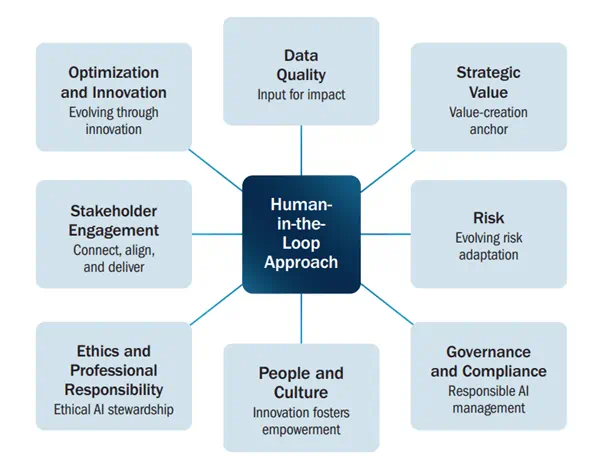
The standard is technology-agnostic and built around two core components. The first consists of eight guiding principles acting as guardrails, covering strategic value, risk, governance and compliance, people and culture, ethics and professional responsibility, stakeholder engagement, optimization and innovation, and data quality. The second comprises five performance domains translating principles into practice: managing stakeholder expectations, defining AI scope, designing systems for quality and reliability, executing strategic AI goals, and managing risk and uncertainty.
While artificial intelligence can process large information volumes and identify patterns, it cannot account for organizational culture, stakeholder dynamics, or ethical implications. Consequently, human oversight remains critical. Project professionals must provide the context, institutional knowledge, and judgment needed to interpret outputs and maintain accountability for decisions.
Without shared expectations and alignment, introducing AI can amplify broken processes and inconsistent governance. Establishing deliberate human oversight, clear escalation paths, and consistent feedback loops enables organizations to scale AI trust and value effectively.